Current Section
- 25 Things
- 2010 Winter Edition
- 2010 Spring Edition
- 2010 Summer Edition
- 2010 Fall Edition
- All News
- Andris Dikmanis, DPT
- Announcements
- Baseline Food & Recipes
- Columns
- College Baseball
- College Baseball Camps
- College Planning
- College Summer Leagues
- College Summer Teams
- High School Baseball
- Hitting Columns
- In The Dugout
- Keg Conditioning
- League News
- Life In The Minors
- Little Leagues
- Major League Strength
- Matt Lemanczyk
- Most Read Articles
- One On One
- Running The Bases
- Softball News
- Strength & Conditioning
- Team News
- Torque AP
- Tournaments
- Travel Teams


Defense: One Hand vs. Two Hands
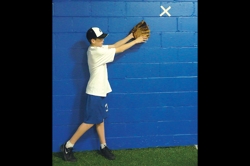
Go to any field, in any town, at any level, and you will commonly hear the same three words spoken over and over. Those words are “Use two hands,” and by most accounts are very helpful words of advice. But as you delve deeper into the defensive side of the game, the more you realize that there is a time and place for using just “one” hand.
Each and every play is different, but the decision to use one or two hands inevitably comes down to being in the most athletic position. The use of two hands is best suited for taking a routine groundball. During the routine type play, a good infielder will actually deflect the ball to their throwing hand thus creating a quick transfer. The glove doesn’t even have to close, and the glove is positioned so the fielder can catch the ball off the palm or flattest part of the glove. Completely flat training gloves with no fingers or pocket are a great training tool to learn how to deflect.
Basically, the use of two hands should be for any ball that your body is completely behind. Besides the routine groundball for infielders, outfielders can use two hands when directly under a fly ball. Catchers when trying to throw out a baserunner if the pitcher throws a strike, and middle infielders receiving a good feed from their double play partners.
The fact of the matter is that not every ball is hit right at you. Not every pitcher throws strikes, and not every thrown ball hits you in the chest. In fact, just as many less than routine plays occur, and using one hand can help in meeting the challenge.
First off, if you look at the picture you can see that the fielder loses valuable reach with the addition of the second hand. By leaving the throwing hand in its natural position it allows for the glove hand to reach further for the ball. This not only increases your range but at the same time keeps one side of your body completely balanced and strong. It’s from this position that an explosive move can be made. All too often one bad throw will lead to another bad throw and cause for sloppy play. In the case of a double play, a good second baseman can reach for a poor throw with the glove hand and transfer it back to the throwing hand which is keeping the rest of the body balanced. The ensuing throw will most likely be on target and strong because the second basemen centered the poor throw.
Outfielders should nearly always catch with one hand since they should resemble a runner as they chase down the ball. Once again two hands will take away from the outfielders athleticism and shorten the reach for the ball. The biggest thing you ??see with young outfielders is that they run with their glove outstretched already. They just don’t realize that they don’t need the glove until it gets within a few feet from them. The same goes for an infielder ranging to their left and right. They need to realize the importance of being an athlete first, and think laterally (side to side) until the body is behind the ball. As with every position, itís important to reach out for the ball and bring it back to their center, which provides balance and strength to their next move.
Using two hands is always going to be a safe bet and should really be stressed for the beginner type player, but just keep in mind that one hand is sometimes better than two as the players become more advanced. It will easily improve their defensive play and help them gain confidence.
The One Hand Transfer

Some of the best ways to work on the one hand transfer is to put the fielder into a stationary wide base and fire balls that they need to reach for. Once the ball is caught, have them quickly bring the ball back to their center. Whether the throw is high, low, left, or right, it should always be brought back to the middle of the body. It is also good to stress the importance of working on this whenever they are having a catch. This is the perfect opportunity to experiment with being quick and realizing what part of the glove allows for the best transfer.
Photos by Jen Jaeger

Comments
Let’s get the conversation started! Post your comment.